
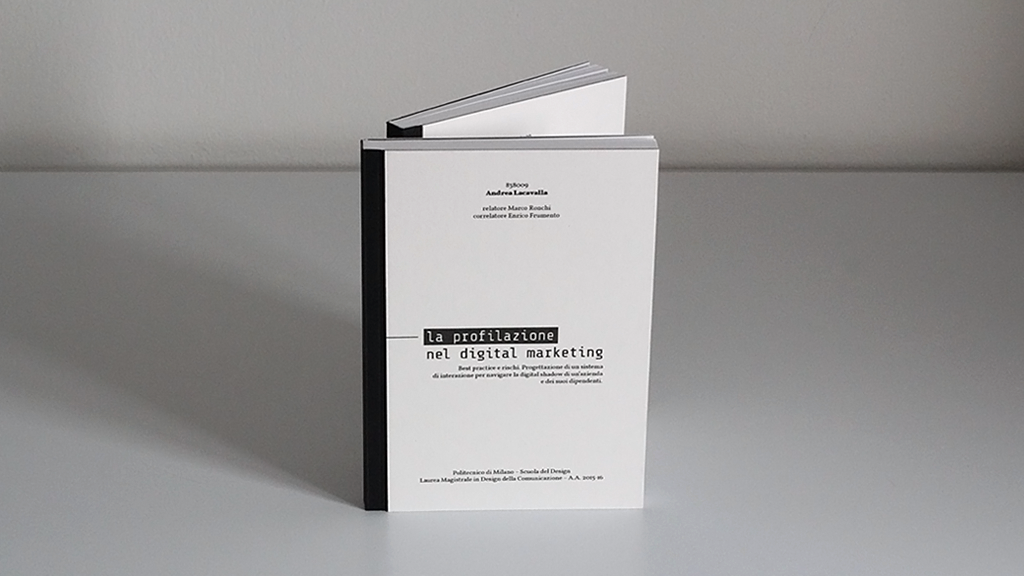
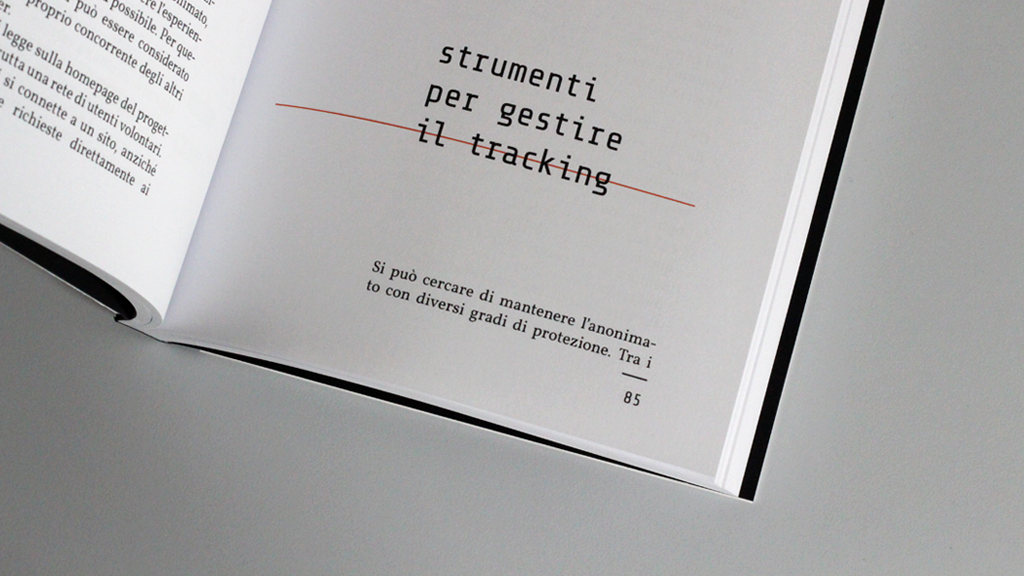
My Master’s Degree final dissertation was a guide for designers who work with browsing data, warning them about the risks of overcollection and clearing up how the whole process works. My goal was to let my colleagues know that security and hacking aren’t just engineering superpowers we can’t deal with, but actually a big part is played by users’ awareness. And since it’s tough to spread awareness at such a wide level on something that still isn’t fully understood by everybody, it is our responsibility as designers to protect our users from such dangers.
Design
In my life, I have always been into new technologies. As a child in the 90’s I was already browsing the Internet, and in the 2000’s I was living its community on forums; but then there was a shift and the Internet was taken over by massive businesses, like Facebook, Google and Amazon. The quality is obviously greater than in previous services, but so is the will to make money out of them. And since nowadays data is making its way to becoming the new oil, it’s not surprising to see online businesses maximise their efforts to collect more of it, while sometimes taking it too far.
When working on projects during my uni career, I felt like both my peers and my professors were underrating the spread of data to third parties. For instance, when designing a new service that requires to sign in they would suggest using the Facebook log-in feature just because it’s easier, both for us — since Facebook shares the ready-made code — and the users, who don’t need to waste time typing their email address and to remember another password. While this is true, no one ever focused on the downside, the risks nor the implications.
All this drove me to look into the issue myself, and it brought me to develop this research. My work describes how data is collected and stored, the actors involved and why they’re interested, how it is possible to make money out of it and the most common uses, ranging from big data to hacking, from self-driving cars to manipulating a population’s mood. The dissertation ends with an in-depth analysis on Social Engineering 2.0 and the case study of Dogana, a EU-funded, 5-million-euro project born to fight spear phishing attacks I worked on in the opening months of 2017 as an interaction designer.
Since my target audience was the community of designers, who typically aren’t into computer science, the whole work is set up to face technical issues from a semi-beginner point of view; most times I’d dive pretty deep into the topics, but through examples, metaphores and step-by-step guidance in order to guarantee a fluid reading.